
Welcome to our blog
Keep up with our latest demographic insights

Last year, I wrote that the census “is kind of like the Super Bowl for demographers, if the Super Bowl only took place once a decade.” Over the past few months, Carolina Demography has been ramping up for the 2020 Census. We worked with the NC Counts Coalition to release a hard-to-count map for North Carolina. In addition, we’ve spoken at events across the state about the importance of the Census, how an undercount could…

More than 4 million Americans may not be represented in the upcoming 2020 census. This is a problem, as the once-every-10-year census affects everything from federal funding to political representation to research projects that rely on accurate census data, like the ones my colleagues and I conduct at the University of North Carolina at Chapel Hill. The 2020 census is fraught with uncertainty for a variety of reasons, including a lack of money, a growing…

Across North Carolina, there are many communities impacted by the presence of a college or university. Where will these students be counted in the 2020 Census: at their school address or at their parents’ home? According to the Census Residence Criteria, students are counted at their “usual residence” or where they live and sleep “most of the time.” This means that college students are counted at their college address, either on or off campus. They…

In February, we partnered with myFutureNC to launch a statewide attainment dashboard to serve as a shared, nonpartisan source of information about the state of education in North Carolina. The dashboard tracks proven indicators along the education continuum, capturing key transition points for students from NC Pre-K enrollment through degree or credential completion and into the labor market. On the dashboard, you’ll find a simple, visual way to learn more about individual indicators, including how…

A report published last month by the National Center for Homeless Education at UNC-Greensboro indicated that the population of homeless students enrolled in public school districts has increased 15 percent in the last three years and now numbers 1,508,265 youth, the highest in more than a decade. In North Carolina, there are an estimated 26,361 public school students who experienced homelessness over the course of the 2016-17 school year, according to the United States Interagency…

We partnered with myFutureNC to launch a statewide attainment dashboard to serve as a shared, nonpartisan source of information about the state of education in North Carolina. The dashboard tracks proven indicators along the education continuum, capturing key transition points for students from NC Pre-K enrollment through degree or credential completion and into the labor market. On the dashboard, you’ll find a simple, visual way to learn more about individual indicators, including how we calculated…

This is a continuation in our series looking at wages after graduation. Previous entries in the series include Degrees and credentials with the highest growth in wages, Highest average wages for UNC system graduates, and highest average wages for NCCC graduates. The question of whether to pursue a degree or credential after completing an undergraduate degree is one that students across the US are considering more than ever before. According to the National Center for…

Population can grow—or decline—from one of two components of change: net migration (both domestic and international) or natural growth (births and deaths). Though both components have contributed to North Carolina’s population growth, net migration has been the driving force of growth in North Carolina since 1990. This has substantially changed the makeup of North Carolina’s population. More than 9 out of 10 North Carolina residents were native to the state a hundred years ago. By…
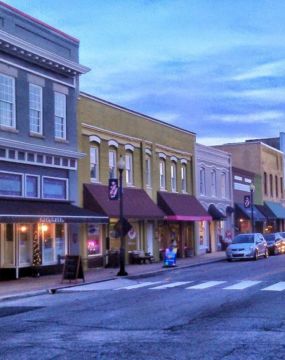
North Carolina’s population grew to an estimated 10.5 million people as of July 1, 2019, according to new estimates from the U.S. Census Bureau. From July 1, 2018 to July 1, 2019, the state’s population increased by nearly 106,500 individuals. This marks the fourth year in a row that North Carolina has grown by more than 100,000 new residents. Among the states, North Carolina had the 4th largest numeric increase since 2018. Only Texas (367K),…
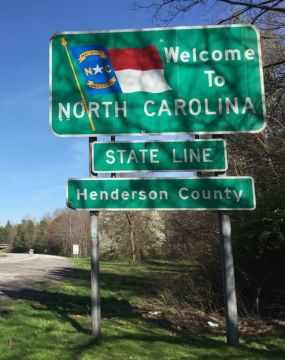
The holidays are an important time for gathering with friends and family, gift giving, celebration, and giving thanks. Before we break for the holidays ourselves, we’d like to share a few holiday facts and figures that relate to North Carolina. 4 million Approximate number of Christmas trees harvested in North Carolina in 2017, according to the USDA National Agricultural Statistics Services (NASS). North Carolina ranked second only to Oregon, which harvested 4.7 million trees. 10…
Your support is critical to our mission of measuring, understanding, and predicting population change and its impact. Donate to Carolina Demography today.