
Welcome to our blog
Keep up with our latest demographic insights

With UNC and Duke playing each other in the Final Four this weekend, all eyes will be on central North Carolina. 🏀 As local demographers based at UNC (#GoHeels), we have a professional obligation to present some demographic facts about both Orange County, NC and Durham County, NC. Percentage of first-time undergraduate students at University of North Carolina at Chapel Hill (entering in fall) from... Orange County: 8.3 Durham County: 3.8 Source: myinsight.northcarolina.edu Population 2010:…
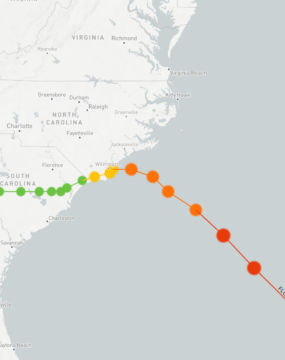
Climate change affects us all, but that impact is not spread evenly across populations. In North Carolina, we are seeing changes ranging from coast line erosion and increased frequency of powerful storms to floods, drought, and increased temperatures. Rural communities are particularly vulnerable to the effects of climate change. Small rural towns are often less resilient – meaning they don’t have the ability to withstand or recover quickly from natural disasters– than their larger, more urban…
Dr. Michael Cline is the state demographer for North Carolina at the Office of State Budget and Management and has given us permission to re-post his content here. Each year, he publishes population estimates and projections for North Carolina and its counties. How many people live here? What are the characteristics of our population? These are the questions people use demographic data to answer. However, there are different types of demographic data available to answer…

The 2021 county population estimates from the U.S. Census Bureau are the first set of population estimates based on the 2020 Census. Here’s what the new data tells us about how North Carolina counties have changed in the year following the Census. 73 NC counties have grown since 2020 North Carolina grew by 112,000 people or 1.1% between April 1, 2020, and July 1, 2021, faster than the national rate of 0.1%. According to the…

In 2015, we published a three part series examining immigration trends in the U.S. and in North Carolina. Over the coming weeks, we'll be updating that series, with analysis of how COVID-19 and recent immigration laws have affected international migration in the U.S. and in North Carolina. The U.S. has been a popular destination for immigrants from across the globe since the 1820s. According to the Department of Homeland Security’s records, approximately 86 million immigrants…

Last week, the Census Bureau released the 2016-2020 5-Year American Community Survey data. Here’s what you need to know. What is the American Community Survey? The American Community Survey (ACS) is an ongoing survey that covers detailed social and economic topics, such as education, employment, internet access, and transportation. Each year*, the Census Bureau releases single-year estimates for places with populations of 65,000 or over and 5-year estimates for places with populations less than 65,000.…

North Carolina is experiencing rapid growth from people moving here from other states. Over the past several years, we have seen increases in both housing and rental prices as well as a shortage of available units in the Triangle region. A 2021 analysis of Chapel Hill’s housing market projects that housing production will need to increase 35 percent to meet projected job and household growth over the next 20 years. And an examination of housing across the country by…

There are three key data sets from the U.S. Census Bureau that we use to understand population trends: the decennial census, the American Community Survey (ACS), and population and housing unit estimates. (Background: a deep dive into each of these data sources). These sources are similar, but not quite the same, which can lead to questions from data users. Here is a summary of some of the questions we’ve received from data users and/or seen…

Dr. Michael Cline is the state demographer for North Carolina at the Office of State Budget and Management and has given us permission to re-post his content here. Each year, he publishes population estimates and projections for North Carolina and its counties. I have published the latest population projections for the state and counties. You can find a summary of the projections here: Population Projections Provide Glimpse into Our Future | NC OSBM These are the…

Dr. Michael Cline is the state demographer for North Carolina at the Office of State Budget and Management and has given us permission to re-post his content here. Each year, he publishes population estimates and projections for North Carolina and its counties. Channel your inner sci-fi nerd for a moment to imagine time traveling to the year 2050. What will North Carolina be like in 28 years? While it’s difficult for us to speculate on…
Your support is critical to our mission of measuring, understanding, and predicting population change and its impact. Donate to Carolina Demography today.