
Carolina Demographics
Keep up with our latest demographic insights
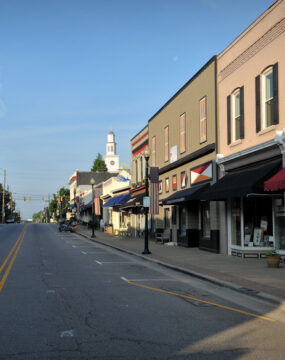
On Thursday, the Census Bureau released 2021 population estimates for municipalities. Here’s what the new data tell us about how North Carolina’s cities and towns have changed since the 2020 Census. Winston-Salem passes 250K residents Winston-Salem’s population estimate for July 1, 2021, was 250,320, an increase of 877 or 0.4% since the 2020 Census. The next North Carolina to pass a population milestone may be Wake Forest: at 49,657 residents in 2021 and fast growth…

We recently received a request from a resident in Lincoln County, asking for assistance in locating data related to digital inclusion, in order to help enroll residents who qualify for the FCC Emergency Broadband Benefit. Specifically, the reader asked us to determine the following: How much the acquisition of 200 hot spots in Lincoln County helped close the digital divide How many households in Lincoln County would be eligible for enrollment in the EBB program,…

There are three key data sets from the U.S. Census Bureau that we use to understand population trends: the decennial census, the American Community Survey (ACS), and population and housing unit estimates. (Background: a deep dive into each of these data sources). These sources are similar, but not quite the same, which can lead to questions from data users. Here is a summary of some of the questions we’ve received from data users and/or seen…

Dr. Michael Cline is the state demographer for North Carolina at the Office of State Budget and Management and has given us permission to re-post his content here. Each year, he publishes population estimates and projections for North Carolina and its counties. I have published the latest population projections for the state and counties. You can find a summary of the projections here: Population Projections Provide Glimpse into Our Future | NC OSBM These are the…

Dr. Michael Cline is the state demographer for North Carolina at the Office of State Budget and Management and has given us permission to re-post his content here. Each year, he publishes population estimates and projections for North Carolina and its counties. Channel your inner sci-fi nerd for a moment to imagine time traveling to the year 2050. What will North Carolina be like in 28 years? While it’s difficult for us to speculate on…
The 2020 census is a point-in-time count of all individuals living in the United States on April 1, 2020. As part of ensuring complete and accurate data, the Census Bureau gives communities the opportunity to request a review of their census count. This process, known as the Census Count Question Resolution (CQR) program, began on January 3, 2022. CQR is limited in its scope. Notably, it does not address potential omissions in the 2020 Census.…

Dr. Michael Cline is the state demographer for North Carolina at the Office of State Budget and Management and has given us permission to re-post his content here. Each year, he publishes population estimates and projections for North Carolina and its counties. North Carolina’s population growth continues, despite the challenges brought on by the COVID-19 pandemic. The state gained more people than all but Texas, Florida, and Arizona. Between the April 1, 2020 Census…
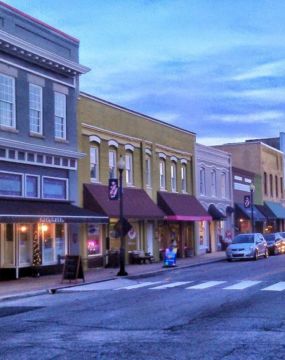
In October, the U.S. Census Bureau released a report detailing why it planned to release the results of the 2020 American Community Survey (ACS) 1-year estimates in an experimental format. The ACS is the only annually updated source of detailed social, demographic, and economic information for all communities in the United States. In addition, the Bureau announced in November that it would delay the release of the 5-Year ACS estimates that had been planned for…

Dr. Michael Cline is the state demographer for North Carolina at the Office of State Budget and Management and has given us permission to re-post his content here. Each year, he publishes population estimates and projections for North Carolina and its counties. In 1990 President George H. W. Bush signed into law a joint resolution designating November as the first National American Indian Heritage Month. That year’s U.S. Census identified 1.96 million people classified as…

Between 2010 and 2020, North Carolina’s population grew by 903,905 individuals, an increase of 9.5%, faster than the national growth rate of 7.3%. Over that same period, North Carolina’s: child population grew by 2,654, an increase of 0.1% adult population grew by 901,251, an increase of 12.4% Nationally, the child population shrank by 1.1 million (-1.4%) and the adult population grew by 23.8 million (+10.1%). In Georgia, a state with similar overall population size and…
Your support is critical to our mission of measuring, understanding, and predicting population change and its impact. Donate to Carolina Demography today.