
Economic Data
Keep up with our latest demographic insights

Colleges and universities can have a significant impact on local demographic and economic statistics. College towns tend to see inflated poverty rates: more off-campus students (as share of population) corresponds to higher poverty rates. In Boone, North Carolina, for example, off-campus students at Appalachian State University make up 57% of the local population* and the local poverty rate is 62%. Some of these poor individuals may be college students who are choosing not to work…
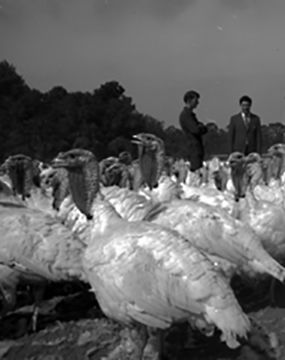
Turkey production is important to the farming sector of North Carolina. In fact, total poultry production – including turkeys, eggs and broiler chickens – is North Carolina’s top agricultural industry, making up 40% of the state’s farm income. Data from the USDA on “turkey disappearance” per capita in the United States indicated a slight uptick from about 16 pounds annually from 2012-2015 to over 16.5 pounds in 2016 and 2017 (projected). As poultry consumption increases…

North Carolina’s agricultural industry contributes $84 billion to the state’s economy and employs more than 1 in 6 North Carolina Workers, according to the Department of Agriculture & Consumer Services. Two of the state’s lead agricultural products—sweet potatoes and turkeys—will grace many Thanksgiving tables on Thursday. Here’s a quick look at sweet potatoes by the numbers: 1st North Carolina’s rank in sweet potato production. North Carolina has led the nation in sweet potato production since…

Series note: This post and the others in this series are the outgrowth of a presentation jointly developed with Dr. Krista M. Perreira and presented by Dr. Perreira to the October meeting of the North Carolina Governor’s Hispanic/Latino Advisory Board. Terminology note: The U.S. Census Bureau introduced the term Hispanic in 1980 and this is a term preferred by some Hispanic/Latino populations. The term Latino became more commonly used in the 1990s and is preferred…
“How can we prepare today to create enough good jobs for tomorrow?” was the question posed by NC State’s Institute for Emerging Issues during their summer FutureWork Prosperity Tour. This tour—and the preceding FutureWork conference—focused on the combined impacts of anticipated technological change and demographic shifts. Today’s post highlights some of the projected impacts of demographic change on the state’s workforce. Projected employment growth will exceed working age population growth. Between 2012 and 2022, North…
Nationally, 22.2% of businesses with paid employees had been operating for no more than three years as of 2014. In North Carolina, this proportion is slightly lower: 20.8% or just over 32,000 of the state’s 154,000 firms were younger businesses, according to recently released data from the U.S. Census Bureau’s first Annual Survey of Entrepreneurs. In contrast, North Carolina had an above average proportion of long-established businesses: 6% of North Carolina businesses with paid employees…
A growing number of North Carolinians are working at home. Since 2012, more than 200,000 North Carolina workers have reported working at home each year, about 4.7% of all state workers according to the American Community Survey data. Are teleworkers similar to individuals who don’t work at home? An examination of the last three years of ACS data—2012 through 2014—suggests they are not. Compared to all North Carolina workers, individuals who report working from home…
February 14th was officially pronounced Valentine’s Day by Pope Gelasius I in AD 496. Nearly 1,350 years later, Esther Howland, a Massachusetts native, is credited with selling the first mass-produced valentine cards in the 1840s. Flowers, Jewelry, and Candy Exchanging presents? If it’s jewelry or flowers, it may be increasingly difficult to find a standalone retailer. Between 2005 and 2013, both the number of florists’ establishments and the number of jewelry stores in North Carolina…
We love playing with data. Turning the raw numbers into meaningful insights is what we do. But the process of getting raw data into a format that is ready for analysis is often time-consuming and occasionally frustrating, even for those of us who regularly work with data. First, you have to identify the source and acquire it. Then you have to make sure you understand the general structure of the file and the variables it…
North Carolina’s agricultural industry contributes $78 billion to the state’s economy according to the Department of Agriculture & Consumer Services. Two of the state’s leading agricultural products—sweet potatoes and turkeys—will likely grace many tables this Thursday as individuals and their families celebrate Thanksgiving. Here are a few fun facts about NC turkeys and sweet potatoes: Turkeys North Carolina is the second largest producer of turkeys, after Minnesota. The state’s turkey production was valued at more…
Your support is critical to our mission of measuring, understanding, and predicting population change and its impact. Donate to Carolina Demography today.